LTL vs FTL Shipping Cost Calculator
Below a certain weight, sharing a truck (LTL) is cheaper; above it, reserving the whole truck (FTL) wins. This finds your cost either way and the breakpoint.
What does this tool do?
LTL vs FTL Shipping Cost Calculator computes the result directly in your browser — Below a certain weight, sharing a truck (LTL) is cheaper; above it, reserving the whole truck (FTL) wins. This finds your cost either way and the breakpoint. Nothing you enter is uploaded or stored.
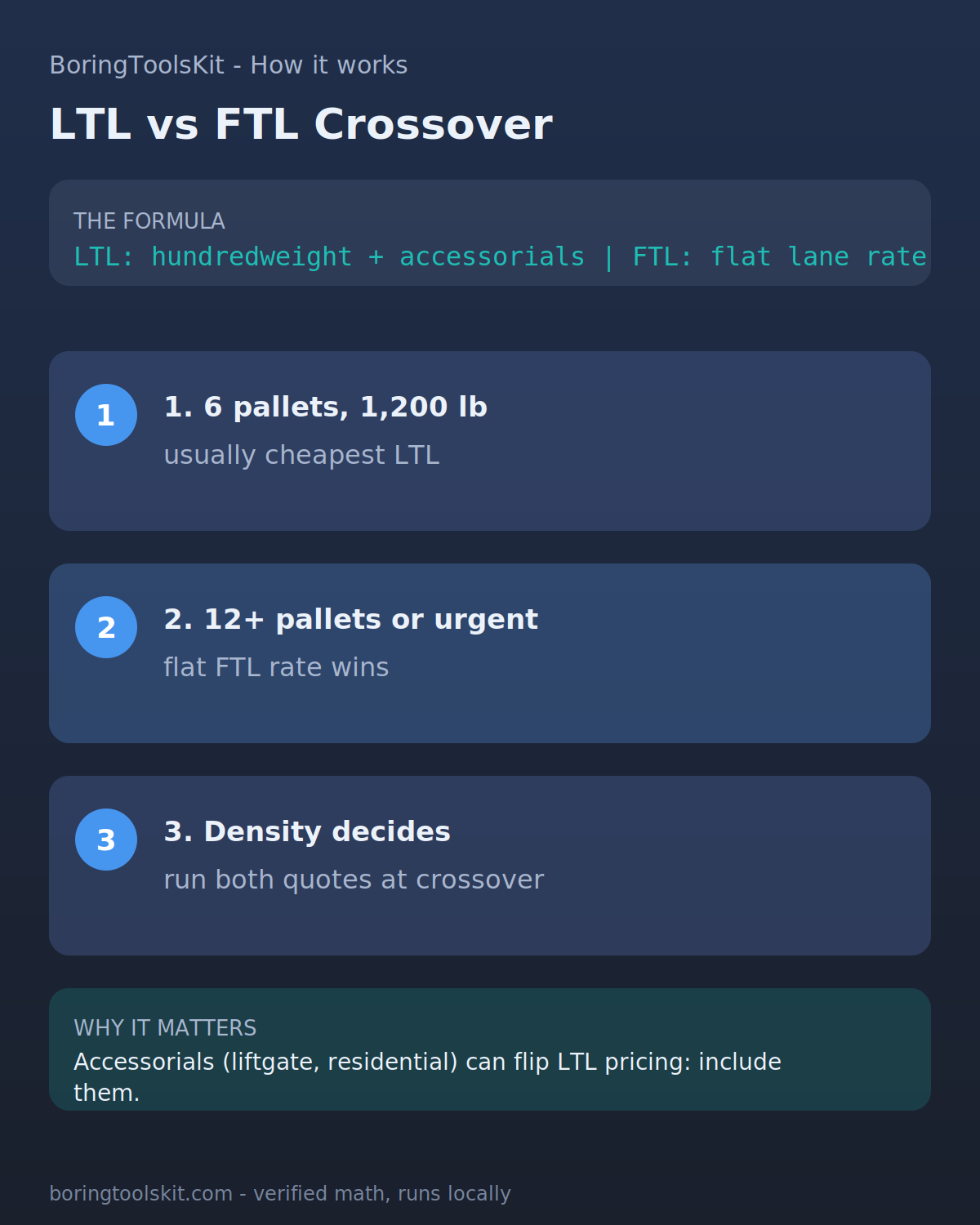
LTL: less-than-truckload shares the trailer — you pay a rate per hundredweight (cwt) × (weight ÷ 100), plus accessorials (liftgate, residential, appointment, inside delivery). FTL: full-truckload reserves the whole trailer for a flat rate — cheaper per pound when you have enough weight to fill it. Breakpoint: FTL becomes cheaper when the flat rate is below the LTL charge, roughly above 10,000-15,000 lb depending on rates. Gotchas: LTL charges by weight class and adds reweigh fees; FTL has fuel surcharges and minimums. These are editable example rates — get real quotes.
How this calculator works
LTL cost = weight/100 lbs (hundredweight) x class rate + fuel surcharge + accessorials. FTL cost = flat lane rate. Break-even: your freight density and volume decide.
Worked example
6 pallets at 1,200 lb total usually prices cheaper LTL; 12+ pallets or a dedicated timeline usually flips to a full truck at a flat rate.
FAQ
When is FTL cheaper than LTL?
Generally above 10,000-15,000 lb, when the flat truck rate beats the per-hundredweight LTL charge. The exact breakpoint depends on your rates — this calculator finds it.
What is an LTL accessorial?
Extra charges beyond the base rate: liftgate, residential delivery, inside delivery, appointment scheduling, and reweigh fees. They add up quickly — model them into the rate.
What weight class is my shipment?
LTL pricing uses NMFC classes (density-based, 50-500) that set the per-cwt rate. Higher density = lower class = cheaper rate. This calculator takes the resulting rate as input.
Figures are editable example defaults for modeling, not quotes or advice. Financial, tax, and medical outcomes vary with your situation — verify with a qualified professional (CFP, CPA, tax advisor, or veterinarian).