Hotshot Rate Calculator
Hotshot runs lean (CPM roughly $0.85-$1.30) but small trucks feel every empty mile. This computes the minimum rate per mile that covers cost plus your target margin, so you stop quoting from gut feel.
What does this tool do?
Hotshot Rate Calculator computes the result directly in your browser — Hotshot runs lean (CPM roughly $0.85-$1.30) but small trucks feel every empty mile. This computes the minimum rate per mile that covers cost plus your target margin, so you stop quoting from gut feel. Nothing you enter is uploaded or stored.
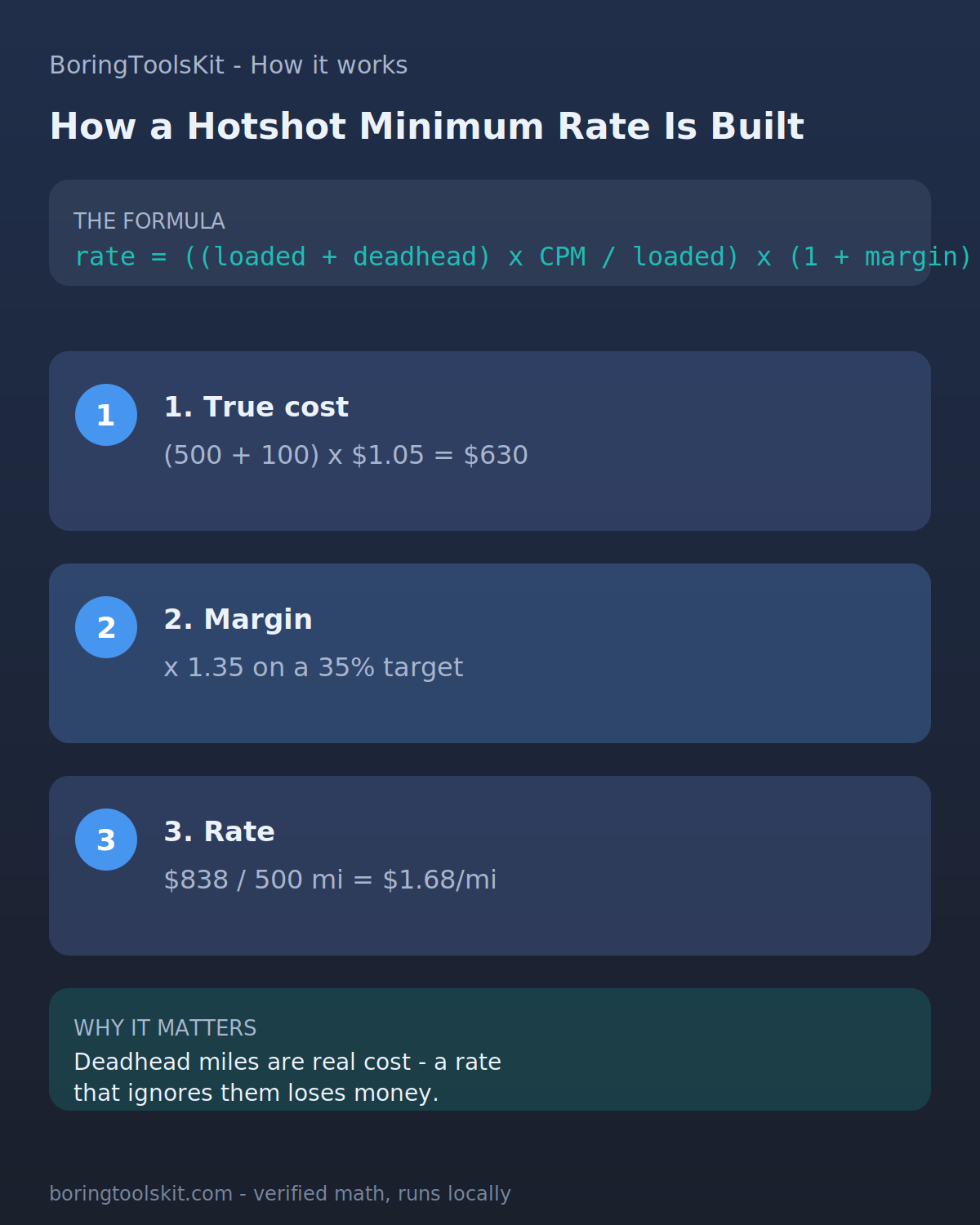
Formula: minimum rate = ((loaded + deadhead) × CPM ÷ loaded miles) × (1 + target margin). Total quote = minimum rate × loaded miles; per-cwt equivalent shown for weight-rated freight. 2026 benchmarks (Bobtail): hotshot CPM $0.85-$1.30/mi; market rates $1.50-$2.50/mi. Use: treat the output as your walk-away floor — quote higher for urgency, oversize, or hard-to-cover lanes, and never below it.
How this calculator works
Formula: minimum rate = ((loaded + deadhead) × CPM ÷ loaded miles) × (1 + target margin). Total quote = minimum rate × loaded miles; per-cwt equivalent shown for weight-rated freight. 2026 benchmarks (Bobtail): hotshot CPM $0.85-$1.30/mi; market rates $1.50-$2.50/mi. Use: treat the output as your walk-away floor — quote higher for urgency, oversize, or hard-to-cover lanes, and never below it.
Worked example
500 loaded miles + 100 deadhead at $1.05 CPM = $630 cost. With a 35% target margin the minimum rate is $1.70/mile ($850 for the load), about $7.09/cwt on 12,000 lb.
What Drives Your Minimum Hotshot Rate
Your cost per mile sets the base: the 2026 benchmark of $0.85 to $1.30 per mile for a 1-ton rig is only a reference, and your real number moves the whole output. Loaded miles act as the divisor, so deadhead rides on top of them. A 100-mile empty leg on a 300-mile load adds a third again to the distance you must recover, before margin enters the picture.
Margin is the multiplier that turns break-even into a real quote. The 2026 benchmark runs 30 to 50 percent above cost, and where you land in that window changes the output more than almost anything else. Compare your result against the $1.50 to $2.50 per mile market range: a minimum close to market rates means thin cushion, while a floor well above market points to cost problems worth fixing before you chase better-paying freight.
Turning Inputs Into a Defensible Quote
Start with a cost per mile built from your own numbers, not the $0.85 to $1.30 benchmark. Add up fuel, payment, insurance, and maintenance for a recent month, divide by miles run, and use that figure. Then be honest about deadhead: estimate the empty miles back to your next likely pickup, because quoting only loaded miles flatters the number and leaves you eating the return leg.
Treat the output as a walk-away floor, never the opening number. Quote above it when a load is urgent, oversize, or sits in a lane that is hard to cover. Run the margin input at the top of the 30 to 50 percent benchmark when you have leverage and near the bottom when you need to keep a truck moving. Enter load weight whenever freight is rated per cwt, so the per-hundredweight view matches how the broker talks.
FAQ
What should hotshot rates be in 2026?
Market rates run roughly $1.50-$2.50 per mile depending on lane and urgency, against a cost per mile of $0.85-$1.30. Your own minimum is the number that matters — compute it from your real CPM.
How much does hotshot cost to run?
A 1-ton hotshot rig runs roughly $0.85-$1.30 per mile all-in (2026): lower fuel than a semi but proportionally higher payment-per-mile and shorter hauls. Track your own monthly numbers.
Why price per hundredweight?
Some hotshot and expedite freight is priced per cwt instead of per mile. The per-cwt view translates your minimum quote into that market's language so you can compare offers directly.
Figures are editable example defaults for planning, not rate quotes. Trucking costs and freight rates vary by region, lane, season, equipment, and negotiation — verify with current load boards, your insurance agent, and fuel receipts before committing to a rate.