Break-Even Cost per Bushel Calculator
Knowing your cost per bushel tells you the price floor you need before you plant. This divides your total production cost by expected yield so you set a realistic marketing target.
What does this tool do?
Break-Even Cost per Bushel Calculator computes the result directly in your browser — Knowing your cost per bushel tells you the price floor you need before you plant. This divides your total production cost by expected yield so you set a realistic marketing target. Nothing you enter is uploaded or stored.
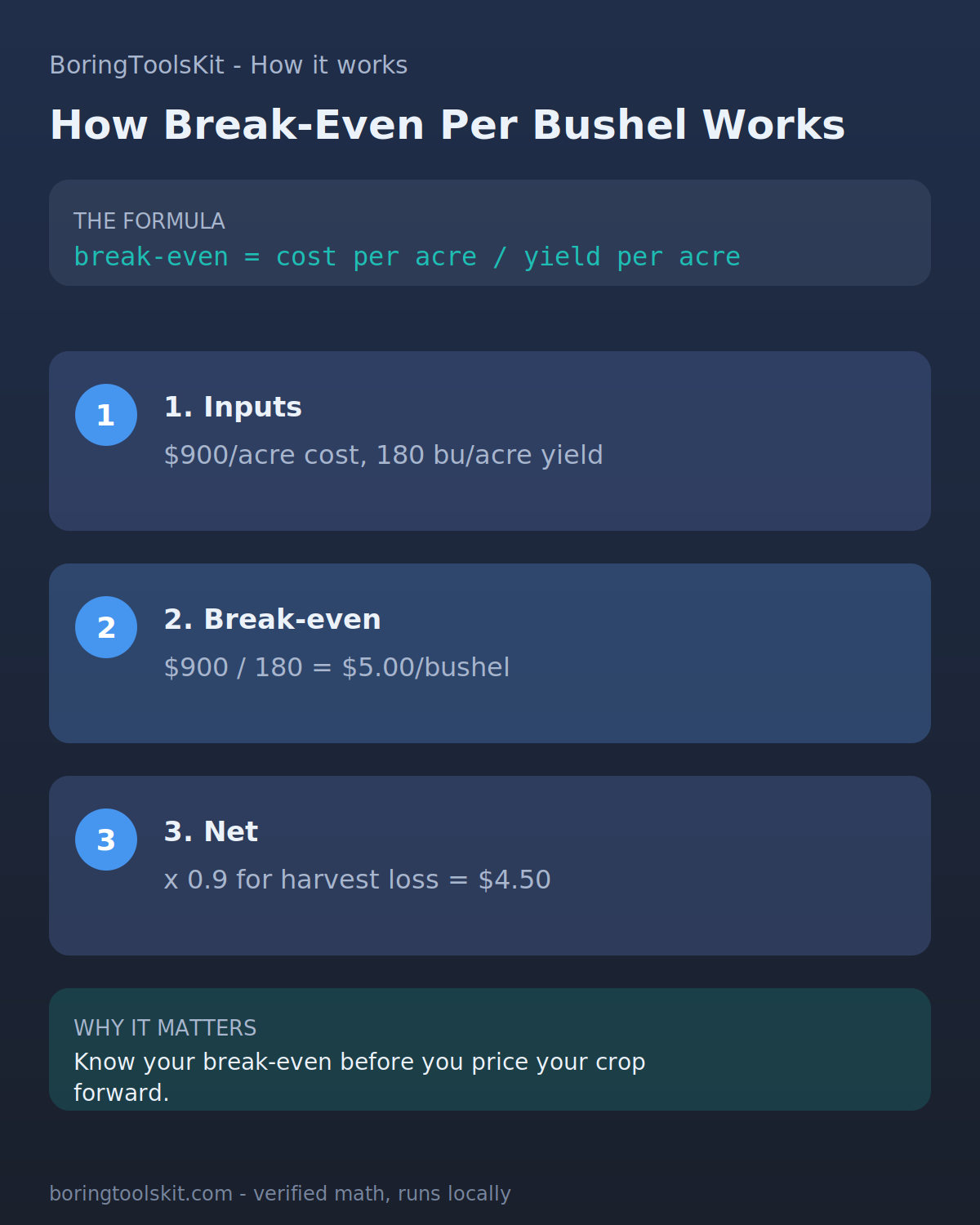
Formula: break-even cost per bushel = total production cost per acre ÷ expected yield (bu/acre). Include ALL costs: seed, fertilizer, chemicals, fuel, machinery, labor, land rent or opportunity cost, and interest. Most farmers add a 5-10% buffer for harvest loss, moisture shrink, and grading discounts. Use: compare the break-even to the forward contract or cash price to decide whether to sell, store, or hedge.
How this calculator works
Formula: break-even cost per bushel = total production cost per acre ÷ expected yield (bu/acre). Include ALL costs: seed, fertilizer, chemicals, fuel, machinery, labor, land rent or opportunity cost, and interest. Most farmers add a 5-10% buffer for harvest loss, moisture shrink, and grading discounts. Use: compare the break-even to the forward contract or cash price to decide whether to sell, st
Worked example
$900/acre of production cost on a 180 bu/acre yield breaks even at $5.00/bushel; after an assumed 10% harvest loss the net break-even is about $4.50/bushel.
FAQ
What is a good break-even for corn?
In 2026 examples, Midwest corn break-evens commonly run $4-$5 per bushel at 180-220 bu/acre, depending on land cost. Yours depends entirely on your cost structure.
How do I calculate my cost per acre?
Sum every variable cost (seed, fertilizer, chemicals, fuel) plus fixed costs (machinery, labor, land) for one acre. Divide by expected yield for cost per bushel.
Why add a buffer to break-even?
Harvest losses, moisture shrink at the elevator, and grading discounts reduce your saleable bushels below what you grew. A 10% buffer keeps the number honest.
Figures are editable example defaults for planning, not guarantees. Crop inputs, prices, and moisture handling vary by farm, region, and year — verify with your local extension service and agronomist.